Una teoría basada en la cuchara intenta distinguir condimentos, salsas y aderezos
Kétchup, mostaza o salsa bang bang: clasificarlos como condimentos, salsas o aderezos sigue siendo objeto de debate.
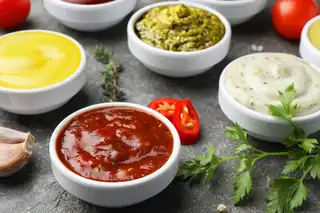
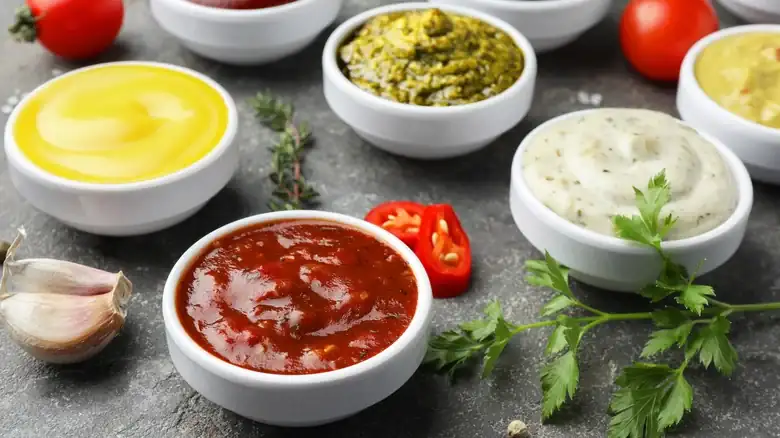
From the classic ketchup bottle to the versatile Bang Bang Sauce and various mustards, there's no shortage of sauces to accompany, dip, or drizzle over your favorite main dish. However, classifying these substances as condiments, sauces, or dressings isn't straightforward. While many assume the terms are interchangeable, their definitions, and which foods fall into each category, remain a subject of debate.
An editor shared the philosophy of a friend, Lily Nelson, which attempts to make sense of this debate. The theory is known as the "Nelson Spoon Theory," named after her. According to this theory, a spoon determines whether a substance is a condiment: if it's not typically handled with a spoon, it's a condiment; if it can be scooped or spread with a spoon, it's a sauce or dressing.
According to this logic, most products packaged in bottles or tubes, such as ketchup, pickles, soy sauce, and barbecue sauce, are condiments, because it's unlikely a spoon will fit through the opening of a squeezable container. However, this definition doesn't account for larger containers, which do allow for serving with a spoon.
The theory has some initial validity, but it has logical flaws: with enough effort, one could use a spoon with any mixture, which invalidates the classification. Other criteria better distinguish these categories. For some, consistency is key: liquid and easily spreadable is usually sauce, while thicker mixtures tend to be more of a dipping sauce.
That measurement of thickness is subjective. Some consider ketchup a thick, paste-like substance, while others find it thinner than hummus.
How they're enjoyed also matters. The controversial mayonnaise divides opinions: some cultures happily dip french fries and vegetables in it, while others only use it as a condiment for sandwich bread. Ranch dressing, which was actually invented by a cowboy on a ranch, can be a sauce when used to dress a salad, or a dip when used to scoop up vegetables. Ultimately, there's no single perfect way to distinguish between them, because it depends on how each person enjoys the product.