Why you should avoid ordering cheese boards at a restaurant
Restaurant cheese boards are usually expensive and always feature the same cheeses, so it's worth preparing them at home.
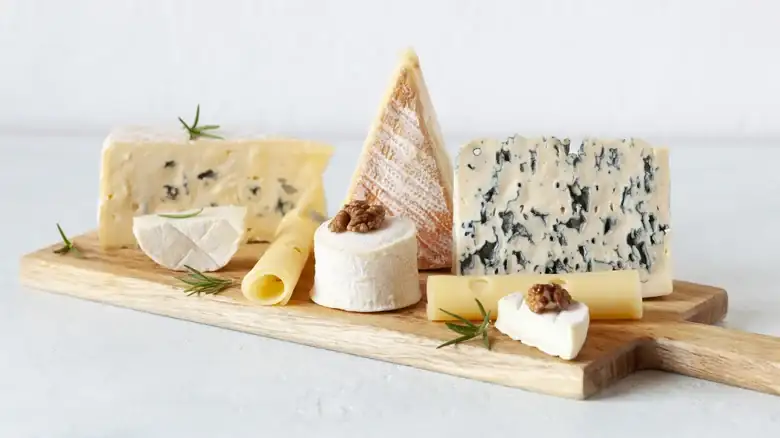
Designing the perfect cheese board is an art: brie, gouda, manchego, and perhaps some goat cheese, with a mix of soft and hard textures and varied flavors. They are an exquisite treat, but in a restaurant they are usually overpriced.
Food critic Alice Levitt, in an article for Business Insider, explains that she avoids ordering cheese boards because of their price. "When I want to try regional cheeses," she wrote, "I go to a supermarket or a cheese shop." The boards are attractively presented to look plentiful, so buying cheese at a supermarket and preparing the board at home allows you to get more for your money.
In many restaurants, the selection is the same: it usually includes plenty of Havarti, often with dill, as well as Manchego, Brie, Gorgonzola, goat cheese, Burrata, and mature Cheddar. Unless it's a specialty cheese shop, you're likely to find the same cheeses. Preparing the cheese board at home allows you to vary the selection.
Ordering a cheese board at a restaurant also has its risks. The menu might not list all the cheeses, or even their prices, and the board might arrive pre-packaged. Prepared at home, on the other hand, it can be assembled fresh at the table.
Adding marinated or fruit-infused goat cheese gives the platter a special touch. Following French tradition, it can be served after dinner as a sophisticated appetizer that aids digestion.
Levitt admits one exception: he'll break his rule if a restaurant offers a unique selection of cheeses and pairings not found anywhere else. "I might order a cheese board if I'm traveling," he wrote, "or if the chef includes exclusive ingredients like crackers and homemade jams." Some cheese shops and wine bars offer, for at least one of their boards, a customer-selected selection process.