El Campero Brings Its Barbate Tuna Cult to a Salamanca Palazzo
The almadraba tuna house from Barbate has opened inside a nineteenth-century palazzo in Madrid's Salamanca district, carrying its full repertoire of sashimi, carpaccio, brasa and spoon stews from the coast to the capital.
The facade gives nothing away. Under the moldings of a nineteenth-century palazzo in Salamanca, the building still reads as a private address rather than a dining room, the kind of block where fish is not supposed to be the subject. El Campero has moved into it regardless, carrying north an entire liturgy built on the Barbate coast, where the almadraba nets have made bluefin tuna into something closer to ritual than ingredient.
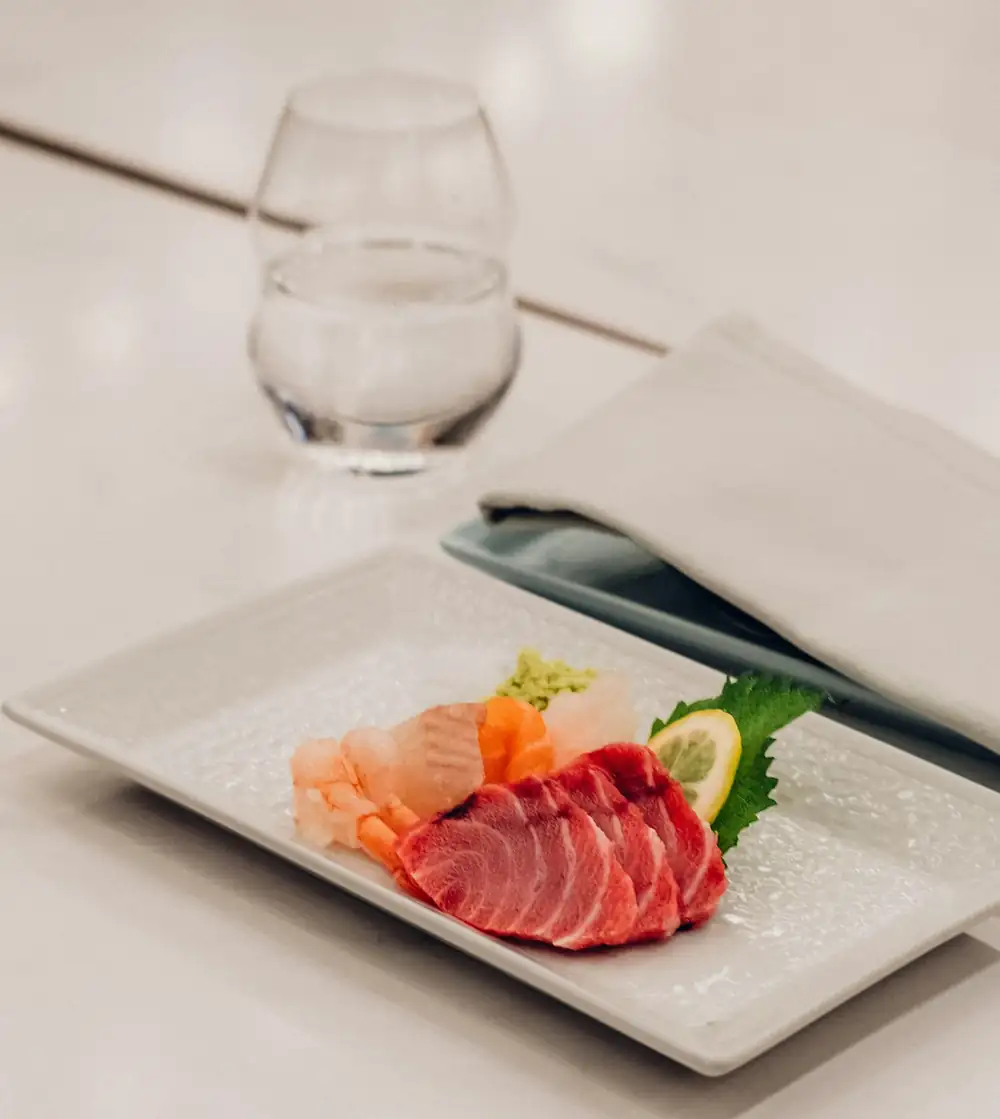
A room like this stages before it serves, the way a set does before the curtain rises, and the direction here runs from the street inward: the palacete's own grandeur first, left intact enough that a passer-by might still mistake the door for a private residence rather than a restaurant, then the dining room proper, arranged so the tables nearest the entrance read as the front of house and the ones set deeper in as the wings, and only once the audience has settled into the quiet choreography of who ordered what and who is watching whom eat it does the technique itself take the stage: sashimi cut thin enough to show the grain of the muscle, carpaccio laid flat like a painted backdrop, the brasa working slowly at the edges of the room, and the guisos de cuchara held back for last, the way a production saves the scene that explains the rest of the play.
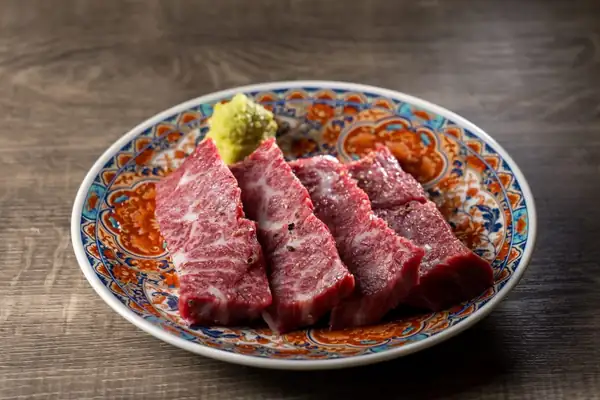
Chef Julio Vazquez's treatment of the tuna moves through its full range without repeating a register: sashimi into carpaccio, carpaccio into the brasa, the brasa into spoon stews that handle what many kitchens ration as delicacy the way a home cook handles dinner.
Half an hour on, back under the same unmarked cornices, what lingers is not the memory of having eaten well. It is the sense of having watched a house rehearse its own certainty, scene after scene, until the curtain fell somewhere on the coast at Barbate and rose again, without a seam, in Salamanca.