Keith Lee on the power of social media storytelling
Keith Lee calls himself basically a Yelp reviewer with a camera.
“So one of our No. 1 rules is that, if I have an experience, I would like my mom to go in the next day and be able to have the exact same experience.”
But the mega influencer can make or break restaurants with a post, and he has millions of followers across multiple social media platforms. His reviews are known to cause “the Keith Lee Effect,” resulting in lines out the door for the concept (if he likes it).
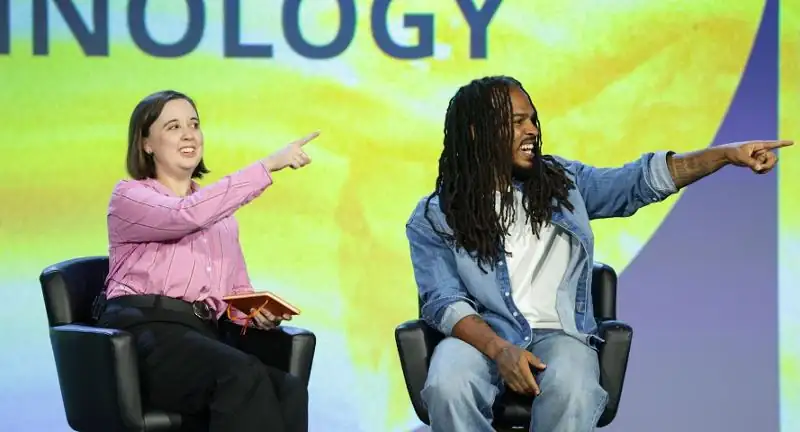
A keynote at the FSTEC conference in Dallas on Thursday, Lee talked about how he has become an advocate for the small restaurant operators he tends to visit, many of which are family owned and don’t have a budget for marketing.
This year, he hosted the inaugural Family Day Festival in New Orleans, an event that brought together some of those concepts to showcase their food. But, unlike most food festivals, the restaurant operators didn’t have to pay fees to attend. The festival was supported by sponsors.
And more than 20,000 people attended the event, which was also designed for families, with music, activities, and rides. Lee is planning another Family Day restaurant event next year in Chicago.
Fundamentally, Lee said the trust he has built with his followers is based on storytelling.
Lee was a professional fighter, starting straight out of high school at age 18. He was a 165 pounder at the time, trying to fight at 135, so his diet was key. He started cooking for himself and his wife.
Saying he suffered from social anxiety, he started recording his cooking sessions and posting them, to build his own confidence for doing interviews on camera. And he started gaining followers.
It was a storyline that many followers could relate to, he said. In those early days, he was on food stamps. He talked about his wife’s pregnancy, and how early videos were shot with him sitting in his daughter’s Paw Patrol chair with his phone propped on a sugar jar.
Now Lee said he has been blessed with the finances to pursue opportunities to expand his brand. But he remains committed to simply being himself, he said.
“I feel like people know I’m going to be me, and I’m going to be honest,” he said. “I think people nowadays are starting to really enjoy getting the opinions of people who look like them and come from the same background as them.”
In traditional dining guides, like Michelin or newspaper columns, reviewers are typically culinary experts who might use language that a lot of people don’t understand, he said.
“What we do is from a consumer, by a consumer, for the consumer,” he said. “So one of our No. 1 rules is that, if I have an experience, I would like my mom to go in the next day and be able to have the exact same experience.”
Many influencers charge restaurants for posts, but Lee does not. He pays for his own food.
In fact, often he will return to the restaurant after the review and leave a large tip. These tips have ranged from $4,000 to $10,000, and they are designed to help the restaurant operator prepare for the Keith Lee Effect by staffing up and ordering more inventory.
“And this is out of pocket, if anyone out there would like to help with that,” Lee told the FSTEC crowd.
The tech company Toast has partnered with Lee to leave $50,000 in tips for each of three businesses. One was The Puddery, in Texas, which was on the verge of closing when Lee first visited. Now she’s on her third location and also has a food truck.
And, though Lee wants to be a platform for those small operators in food deserts who might get overlooked, he’s also engaging with chains.
Lee said he met recently with Raising Cane’s founder Todd Graves, who also has quite a following on social media.
Lee also recently posted about The Cheesecake Factory’s Cajun salmon dish, which has gone viral. Across the country, the casual dining chain has been running out of Cajun salmon at times because the dish has become so popular.
Other chains Lee loves include Topgolf (his wife used to work there), In-N-Out Burger, Shake Shack, and Chick-fil-A, he said.
Fundamentally, he told the tech crowd to make an effort to engage with their guests on social media.
“Everybody wants to feel like they can relate to something now,” he said. "That social media interaction may just be “a 20-year-old laying in his bed and dropping memes. But it makes people want to be part of the experience.”
Also, he urged the tech executives to hire young people who speak the language of social media, because it’s constantly evolving.
“I’ll be 30 this year, and I’m already ‘Unc,’” said Lee.