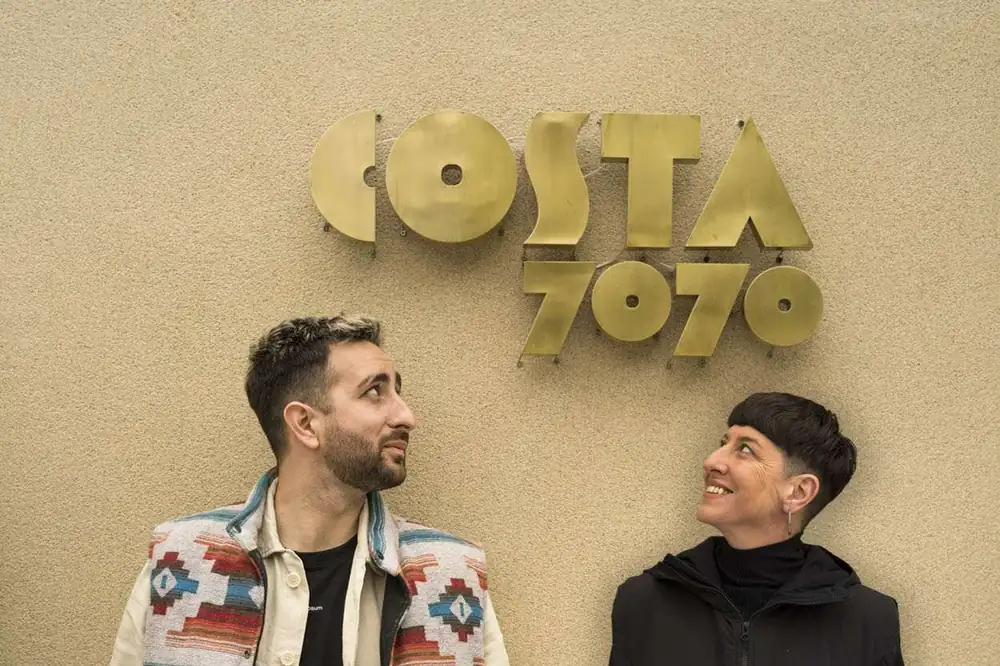
Costa 7070 brings together a restaurant, bar and dance floor on the North Waterfront
Inés de los Santos and Pedro Bargero designed Costa 7070, a space on the Costanera, facing the Río de la Plata, where you can eat, drink and dance.
With a capacity for 220 seated people and 600 between its two levels, in a total of 1500 m2, the proposal refers to the nightclubs of Ibiza and seeks to revive the port mystique that once shone with great restaurants and nightclubs in this area of the city.
“The venue had a license for dancing, and the challenge was to create a nightclub. I started imagining what this place could be like, and immediately Ibiza, the Balearic Islands, the Mediterranean came to mind. I wanted it to be more daytime-oriented, with lots of greenery, not as black and red as nightclubs, but a place where people could come and enjoy themselves from sunset onwards. With these ideas, I contacted Pedro Bargero (who had been studying the rice dishes of the Litoral region and the fish from the rivers and the Argentine Sea for some time), and that's how this project, very much inspired by Spain, began to take shape,” says Inés de los Santos.
The space is divided into several areas: the restaurant, the cocktail bar, and the upstairs dance floor, which is about to open and is expected to come alive as the night progresses. The oval bar, designed so that diners can enjoy the experience while watching the bartenders at work, is the jewel of the main room. Above it hangs a giant LED lamp, reminiscent of the signs that crown the bar in Cochinchina, next to a cube of changing lights that adds character and texture to the space. Upstairs, a glass-enclosed lounge with seating and beanbag chairs overlooks this cube, which acts as the nightclub's "conveyor ball." To one side, a spacious patio and gallery offer music at full volume from the DJ, and at sunset, with a drink in hand, the sun illuminates the water intake towers of the Río de la Plata, which are part of the logo.
Pedro Bargero's cuisine evokes the roots of Spanish tradition with a modern touch, focusing on coastal rice dishes and river and sea fish, a subject the chef has been researching for several years. The menu begins with appetizers and tapas: a fritter filled with squid ragu with garlic and honey aioli, fresh oysters, anchovies in olive oil, pacu ribs, grilled seafood pintxos with roasted onion and green chimichurri, patatas bravas, and prosciutto croquettes with browned butter aioli and pickled red onion. These are followed by dishes to share, such as garlic prawns, smoked octopus seared and finished on the grill with paprika and olive oil, potato omelet with raw prawns, Russian salad, burrata with caramelized carrots, and pasta carbonara.
The creamy rice paellas are the crown jewel of the menu. Prepared with special broths for each option, Bargero uses short-grain rice from Entre Ríos and they are served at the bar in a 30 or 38 cm paella pan, with a minimum order for two people. There are seafood, meat, duck, and mushroom (vegetarian) paellas. The restaurant suggests a set of etiquette guidelines: each diner serves themselves an imaginary portion from the center outwards, it's advisable to ask before adding lemon, and any unwanted pieces are discreetly left in the center. Turning the paella pan upside down is considered rude, as each portion belongs to the person holding it. Regarding the socarrat, the crispy rice at the bottom of a classic Valencian paella, Bargero explains: "What we're aiming for isn't a typical Valencian socarrat, but rather that, once cooked over the fire, the rice grains are completely cooked. We're not looking for that crispy texture that many people are used to." Ideally, some parts of the paella will be crispier to offer different textures in the same dish, but we focus on the rice being perfectly cooked."
The grill, designed for meat lovers, offers chicken, sweetbreads, ribeye steak, sirloin steak, and river or sea fish, depending on availability, as well as grilled, fried, roasted, and fresh vegetables. For dessert, there's Basque cake (this time with dulce de leche), rice pudding, chocolate cream, yogurt parfait with flowers, and pistachio ice cream. To accompany your meal, the menu includes sangrias, gin and tonics, and wine-based cocktails with lower alcohol content. Inés explains it this way: "I thought that offering a lighter and fresher selection could improve the overall experience."
Among the drinks sampled were Los Pescadores (a limoncello with mandarin syrup, rue, iltico, and soda), the Gin and Tonic de la Vera (with Tanqueray gin, orange syrup, paprika, rosemary, and Britvic tonic water), and Como el agua (with gin, fennel brine, citrus, and seeds). There were also three sangrias: one with Cabernet Franc, another with Albariño, and another with a reduction of Chandon Aperitif and Alma Cuatro Phos Pinot Noir.
Costa 7070 is located at Av. Costanera Rafael Obligado 7070, CABA. From Tuesday to Thursday, the kitchen is open from 7:00 PM to midnight, and the bar from 7:00 PM to 2:00 AM; on Fridays and Saturdays, the kitchen is open from 7:00 PM to 1:00 AM, and the bar from 7:00 PM to 3:00 AM.