The racket of food bloggers on restaurants, the complaint by Franchino the criminal and Repubblica
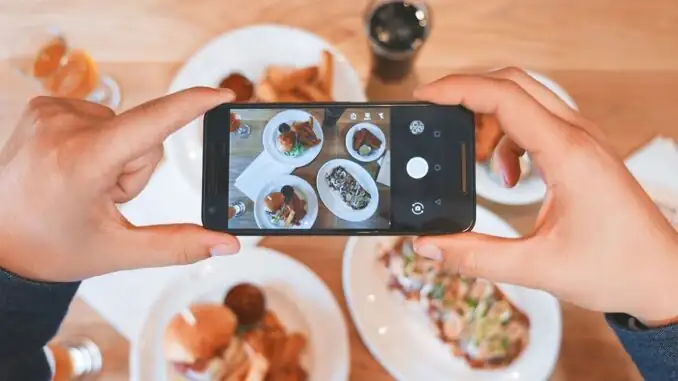
They're actually calling it racketeering, a strong word, because it alludes to a kind of extortion. The Roman edition of La Repubblica is running a feature, written by Valentina Lupia, detailing an increasingly widespread phenomenon: influencers and food bloggers who don't just advertise restaurants, but have created a veritable black market. Anyone who doesn't pay is out. It's not extortion in th
Repubblica also provides a price list: "For a standard service that includes a reel (i.e., a video), a TikTok, and an Instagram Stories session, a Roman restaurateur should shell out 70 euros. For a complete package that also includes sponsorships and a more long-term 'collaboration,' even 1,400 euros per month." Naturally, it all depends on the number of followers. Those with more than 100,000 can go around asking for money, canvassing the local area.
An example: "Work is organized like this," reads a chat between a food influencer and a person looking for a job. "You organize your days." Some examples? Monday in Trastevere, Tuesday in Fiumicino, Wednesday in Testaccio, Thursday in Piazza Bologna, Friday in Civitavecchia. Once there, you put in a lot of patience and tour every business in that area, telling them what you do and if they're interested. If they are, you get a contact and pass it on to the girl in the office who then closes a deal with us, and only once the deal is sealed do you get paid a percentage. There's a "fixed salary," but only as "expense reimbursement." The "real profit, however, is in contacting interested businesses." Not just restaurants, but also pizzerias, fast-food joints, small shops, and even shopping malls, as happened with one of the largest in EUR, "as if they were real estate agents."
Naturally, influencers are careful not to highlight the sponsored content, as they should, with hashtags like #invitedby, #giftedby, or #suppliedby if you're invited, or #adv and #ad if it's advertising. "After Franchino er Criminale's complaint, #adv appeared on Instagram pages that sponsor restaurants. Posts published months ago were edited in the last two days simply to add the hashtag and avoid legal trouble. But on TikTok, this isn't allowed, and videos on the platform are still effectively covert advertising."
The newspaper also features an interview with Daniele Fadda, owner of Santo in Trastevere, who discusses the influencers' insistence. And there's an interview with Valerio Massimo Visintin, who makes a very clear point: restaurateurs who agree to pay are complicit.