Chopsticks: types, how to hold them and basic etiquette rules
Chopsticks are not used like any other cutlery: they require practice, and mastering their grip makes all the difference when eating sushi or noodles.
Chopsticks are two thin sticks, usually made of wood or bamboo, joined at one end. They have been used in Japan and many other Asian countries for thousands of years as an alternative to spoons or forks. Unlike these utensils, they cannot be held in the hand and require some skill.
Chopsticks vary in length, thickness, and material depending on the country. Japanese chopsticks are between 18 and 23 cm long, usually made of lacquered wood or bamboo, and have a thinner tip, making it easier to handle delicate foods like sushi or sashimi. Chinese chopsticks are between 20 and 30 cm long, thicker at the end, and have a square tip for a better grip; since they are shared among several people, they tend to be longer. Korean chopsticks are made of metal or stainless steel and have a flat, rectangular shape along their entire length, allowing for better control of slippery ingredients like noodles or rice cakes.
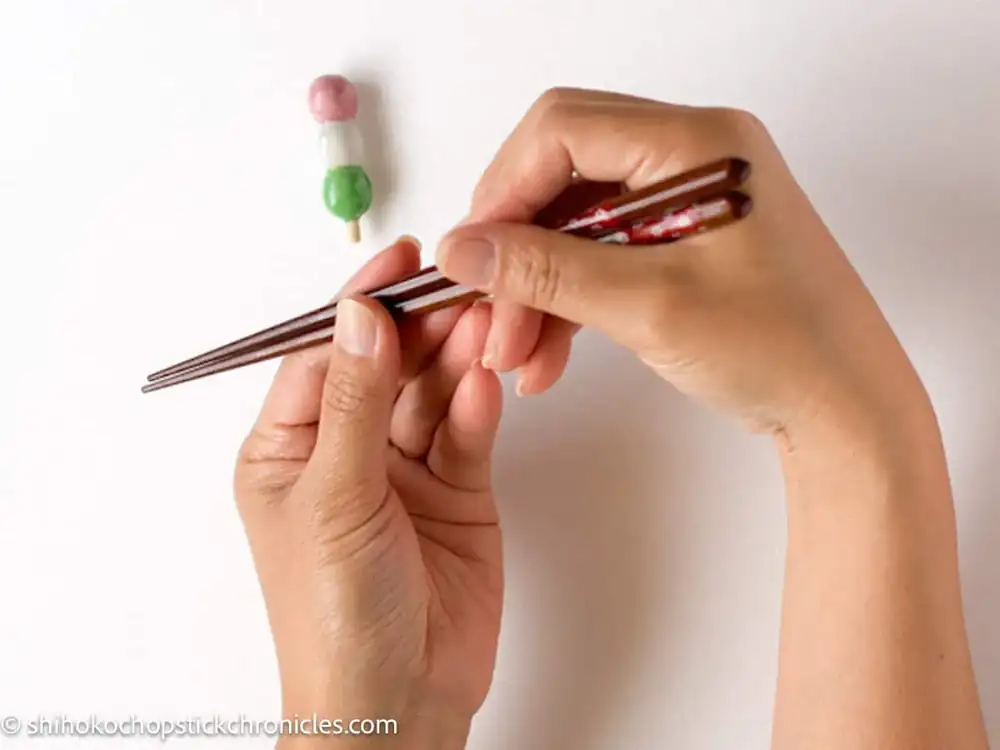
Holding them properly is the trickiest part. It's common to hold them only with your index finger and thumb, but that's not the correct way. The bottom chopstick rests between the base of your thumb and the tip of your ring finger of your dominant hand, and it doesn't move. The top chopstick is parallel to the bottom one and is held about a third of the way down its upper end with your thumb, index, and middle fingers, as if you were holding a pencil. To pick up food, only the top chopstick is moved, up and down.
The most common mistakes are gripping too tightly, crossing the chopsticks or leaving gaps between them, relying solely on the fingers instead of the wrist, and holding them too close to the tips. The tips of both chopsticks should be aligned. To practice, you can pick up cotton balls with chopsticks or transfer grains of rice from one bowl to another using only the tips.
In Japan and other Asian cultures, there are rules of etiquette. Crossing chopsticks symbolizes death in some cultures, and pointing with them is considered impolite. Chopsticks should also not be stuck into rice, a gesture associated with funerals, nor used to spear food, which is considered offensive in many Asian cultures. When offering food to someone, it is best to place it on their plate rather than passing it directly with chopsticks.